
• English
  • Hindi
  • Marathi
Accessibility options

भारतीय उष्णदेशीय मौसम विज्ञान संस्थान

Indian Institute of Tropical Meteorology

X
  • About IITM
    • General Information
      • Directors Page
      • Secretary, MoES
      • Former Directors
      • IITM at Glance
    • Committes
      • Governing Body
      • Research Advisory
      • Finance
      • Society
  • Our Programs
    • Atmosphere Research Testbeds
      • Atmospheric Research Testbed in Central India (ART - CI)
      • High Altitude Cloud Physics Laboratory (HACPL)
      • Lower Atmospheric Research using Unmanned Aerial System Facility (LARUS)
      • Mumbai Radar and MESONET
      • Radar & Satellite Meteorology
    • Center For Climate Change Research (CCCR)
    • Climate Variability and Prediction
    • Development of Skilled Manpower in Earth System Sciences (DESK)
    • High Performance Computing
    • Metropolitan Air Quality and Weather Services
    • Mission Mausam
    • Monsoon Mission
      • Monsoon Mission
      • Seasonal Prediction
      • Sub-seasonal (Extended range) prediction
      • Short and Medium Range Prediction
      • IMPO
      • UVMP
    • Physics and Dynamics of Tropical Clouds (PDTC)
      • Cloud Aerosol Interaction and Precipitation Enhancement (CAIPEEX)
      • Thunderstorm Dynamics
  • Publications
    • Research Publication
    • Press Releases
    • IITM e-Newsletter
    • Knowledge Resource Portal
    • Reports
      • Research Reports
      • Scientific Report
      • Technical Report
      • Annual Report
      • Other Reports
    • Information Notes
      • Miscellaneous Publications
      • Information Notes
    • Brochure / Flyer
    • Indradhanush Patrika
  • Community
    • Scientific
      • Scientist
      • Project Scientist
      • Research Scholar
      • Scientific/Technical Support
      • Project Staff Scientific
      • Retired Scientist
    • Administrative
      • Admin
      • Coordinating
      • Multi-Tasking
      • Project Staff admin
      • Retired Staff
  • Quick Links
    • Tender
    • Public Information
      • Pensioners Page
      • RTI Act
      • Sevottam System
      • IPR
    • Seminars / Lectures
      • Seminars / Talks
      • Visitors
    • DESK Calender
    • Rajabhasha Patal
    • Fit India Fitness Protocols
    • IITM Statistics
  • Products
  • Academics
  • Join US
    • Regular
    • Contract
    • Walk in Interview
  • Contact
    • Contact Us
    • Department Contacts
पृथ्वी प्रणाली विज्ञान परिषद के अंतर्गत एक संस्थान, पृथ्वी विज्ञान मंत्रालय, भारत सरकार
An Institute under Earth System Sciences Council, Ministry of Earth Sciences, Government of India
Search
Your browser does not support the video tag.

Sub-seasonal (Extended range) prediction

Our Programs / Sub-seasonal (Extended range) prediction
About Us
Objectives
Project Details
Project Highlights
Publications
Product
Our Team
Photo Gallery

About Us

ART-CI Research Facility

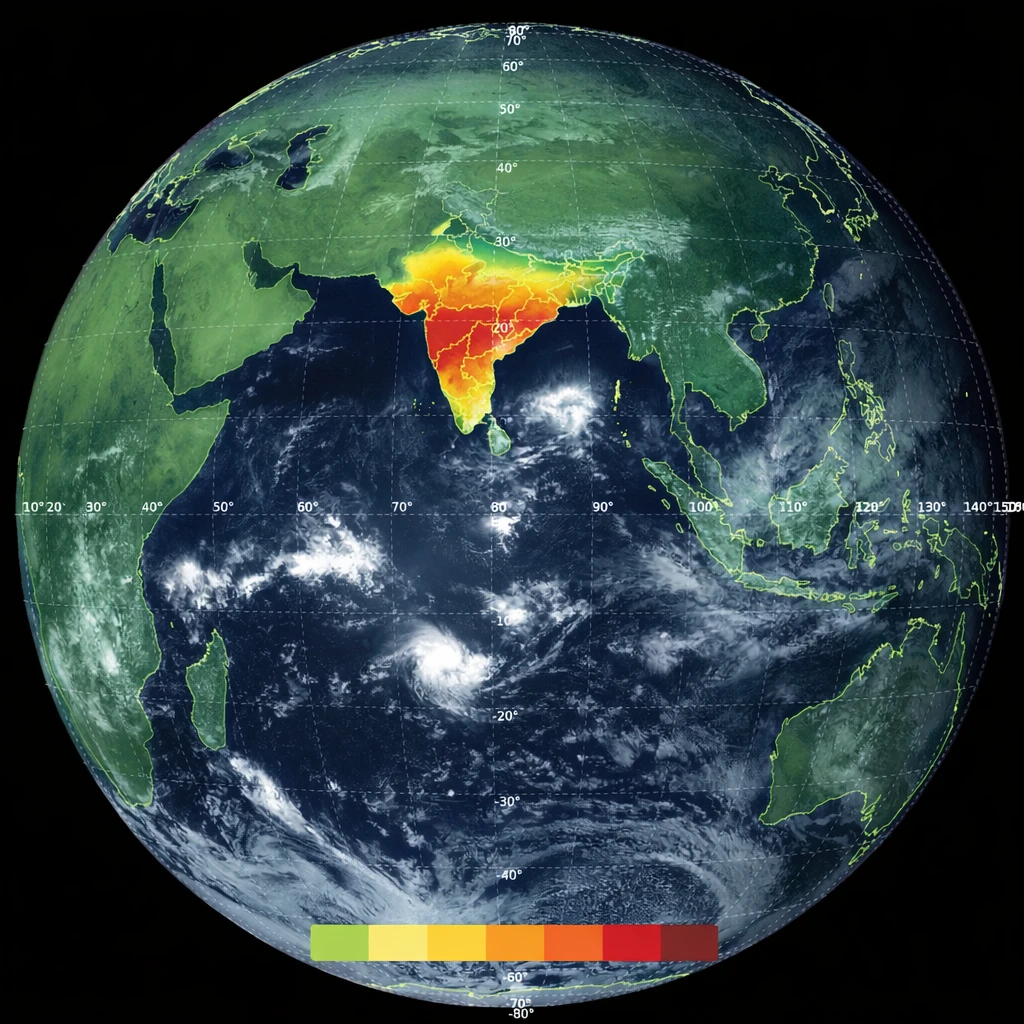
The Extended range prediction (ERP) refers to the meteorological forecast beyond 10 days. It is the most difficult range of forecast as it lies between the short-range (where the effect of initial conditions dominate) and the long-range (where the boundary conditions dominate) and where the effect of initial conditions starts diminishing and the effect of boundary conditions have not started. However, this is an important time scale as it gives sufficient time for the disaster managers and various stakeholders in the agriculture, hydrology, power and energy sectors to their preparedness in averting adverse effects. Therefore, there is always a huge demand for accurate forecasts in this time scale.

Under the National Monsoon Mission (NMM) Project (Rao et al., 2019) of the Ministry of Earth Sciences (MoES), the Indian Institute of Tropical Meteorology (IITM) started ERP efforts in 2011 by adopting the Climate Forecast System (CFS) from the National Centre for Environmental Prediction (NCEP), USA. An ensemble prediction system (EPS) has been developed for the ERP by using an indigenous perturbation technique (Abhilash et al. 2013), which was later developed into a multi-model EPS. Several post-processing techniques have also been developed to improve the prediction skill of extreme weather events (Sahai et al., 2017; Ganesh et al., 2018, 2020). The EPS has remarkable skill in delivering an outlook on the intraseasonal fluctuations within the Indian summer monsoon, Madden-Julian Oscillation, heat/cold waves, cyclogenesis, and heavy rainfall events (Abhilash et al., 2013, 2014a,b,c, 2015a,b; Sahai et al., 2013, 2015a,b, 2017; Joseph et al., 2015a,b, 2016, 2019; Mandal et al. 2019; Dey et al., 2019; Ganesh et al., 2020), and this was adapted by India Meteorological Department (IMD) for operational purposes in 2016. Henceforth, these forecasts are used for generating the agricultural bulletins every week, which proved to be beneficial for farmers in increasing crop yield and choosing cost-effective crops (Chattopadyay et al. 2018). Health bulletins are also being generated by IMD using ERP guidance. An early warning system for the probabilistic prediction of vector-borne diseases has also been developed based on the ERP using AI/ML methods (Sahai et al. 2020).

In addition to these, efforts are now underway in generating the second-generation ERP (ERPv2) with a multi-physics framework for the improved prediction of the weather systems beyond 2 weeks (Sahai et al. 2021; Kaur et al. 2021). A competent set of physics pairs based on convection (simplified Arakawa Schubert SAS (Arakawa and Schubert 1974), revised SAS with modified shallow-convection (Han and Pan 2011), and microphysics (Zhao & Carr (Zhao and Carr 1997) and Ferrier (Ferrier et al. (2002)) schemes is selected to formulate a physics-based ensemble. The system with only control runs are showing great potential in the first three week leads. Therefore, for the ERPv2, we have three initial condition perturbed ensemble members (control + two) each for six multi-physics combinations, thus totalling 18 ensembles (3 initial condition perturbation X 6 physics perturbation). The experimental forecasts based on this new system, i.e., ERPv2, are now available and updated every Thursday on a real-time basis on this website,https://www.tropmet.res.in/erpas/.

Latest News

Social Media Highlights

IITM Logo

Indian Institute of Tropical Meteorology

IITM Pune researches monsoons, climate change, and weather forecasting using advanced models and supercomputing

Location

Total Visitors

5441

Location

Last Updated On

31, May 2026

Explore

  • Tenders
  • Careers
  • Employee Corner

Other Pages

  • News
  • Events
  • RTI
  • Sitemap

Quick Link

  • Terms & Conditions
  • Privacy Policy
  • Copyright Policy
  • Content Archival Policy

Official Info

  • Location

    Location

    Dr. Homi Bhabha Road, Pashan, Pune 411 008, Maharashtra, India

  • Location

    Phone

    91-20-2590-4200

  • Location

    Fax

    91 (020) 25865142

© 2025. All Rights Reserved.

Employee Corner

Decorative Line

Circulars/Notifications

IITM Cloud

EOffice