About Us
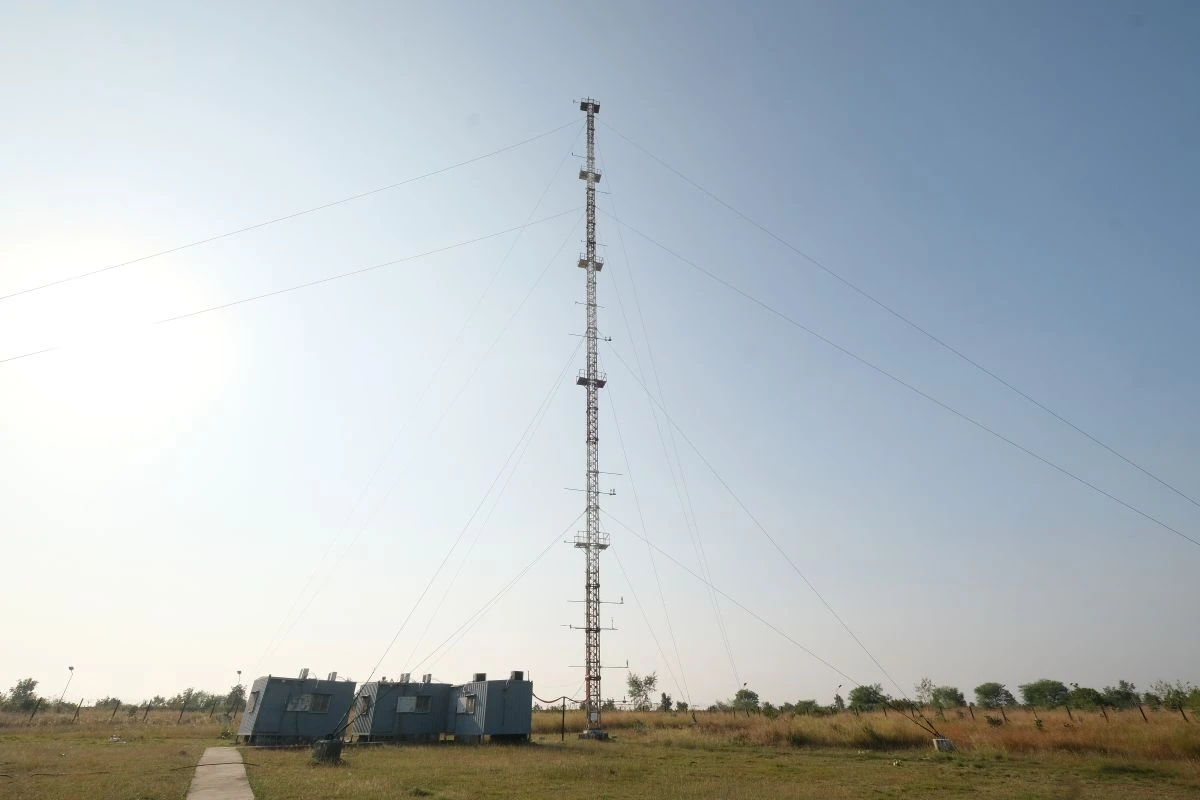
The program aims for understanding the water vapour, clouds, precipitation, energy balance and associated thermo-dynamical and feedback processes by using the remote sensing techniques. The remote sensing techniques make use of a sensors that can take the measurement of the objects or areas from a distance without coming into physical contact with the observed objects. Example of remote sensors are radar, lidar, satellite etc.
Radar is an acronym for RAdio Detection And Ranging. IITM has two mobile polarimetric radars operating at X-band (~9.53 GHz) and Ka-band (~35.23 GHz). Both are scanning radars. The polarization capability of radar gives better estimation of rainfall as compared to conventional radar systems. In addition, the shape and size of the hydrometeors can also be estimated.
The Western Ghats (WGs) located parallel to the west coast of India receives a huge amount of rainfall during the Indian summer monsoon (ISM) in which topography plays a huge role in it. To understand the dynamics and microphysics of monsoon precipitating clouds over the WGs, a High Altitude Cloud Physics Laboratory (HACPL) has been setup at Mahabaleshwar (17.92 oN, 73.6 oE, ~1.4 km AMSL) in 2012. The HACPL is a natural laboratory to understand the fundamental properties of clouds, as during the monsoon, the clouds can be at the surface level and can be examined with ground based monitoring system. To supplement HACPL in-situ measurements, the IITM’s, ground based, X- and Ka-band radars are deployed at Mandhardev (18.04 oN, 73.87 oE, ~1.3 km AMSL), hills of the Western Ghats. Both radar operates in volume of plane position indicator (PPI) and range height indicator (RHI) mode and are vital instruments to understand the 3-D cloud structures along with the dynamics and microphysics of monsoon precipitating clouds over the WGs. We also have interest to validate the numerical models by comparing with radar derived products.
The space based remote sensing payloads on satellites can an unique platform for monitoring the Earth’s atmosphere. This group focuses to use satellite data (e.g., A-Train, COSMIC, GPM, INSAT-3D, ISCCP, KALPANA, MODIS, SMMR-SSM/I, VHRR, TRMM, etc) to understand the spatial characteristics of the water vapour, clouds, precipitation, thermodynamics, tropical tropopause and associated dynamics. The dataset provide climatologies of the three-dimensional distribution of clouds and precipitation, their characteristics, their variabilities at various time and spatial scales and impact on atmospheric energetics. Also, utilisation of multi-satellite data for teleconnection studies of polar, mid and tropical varibailities in understanding the large-scale dynamical effects of clouds- and aerosol-precipitation interactions over the Asian domain, in particular, over India.